
Wednesday, April 8 @ 5:00 – 6:15pm
Chazen Auditorium
FREE & OPEN TO THE PUBLIC
Our graduate students earning their Masters degrees will present their interdisciplinary work to the public. Explore their body of art, three-years in the making through the development of a rigorous studio art practice under the supervision of a faculty guidance committee, learning to cultivate professional practices that facilitate a sustainable career in the arts.
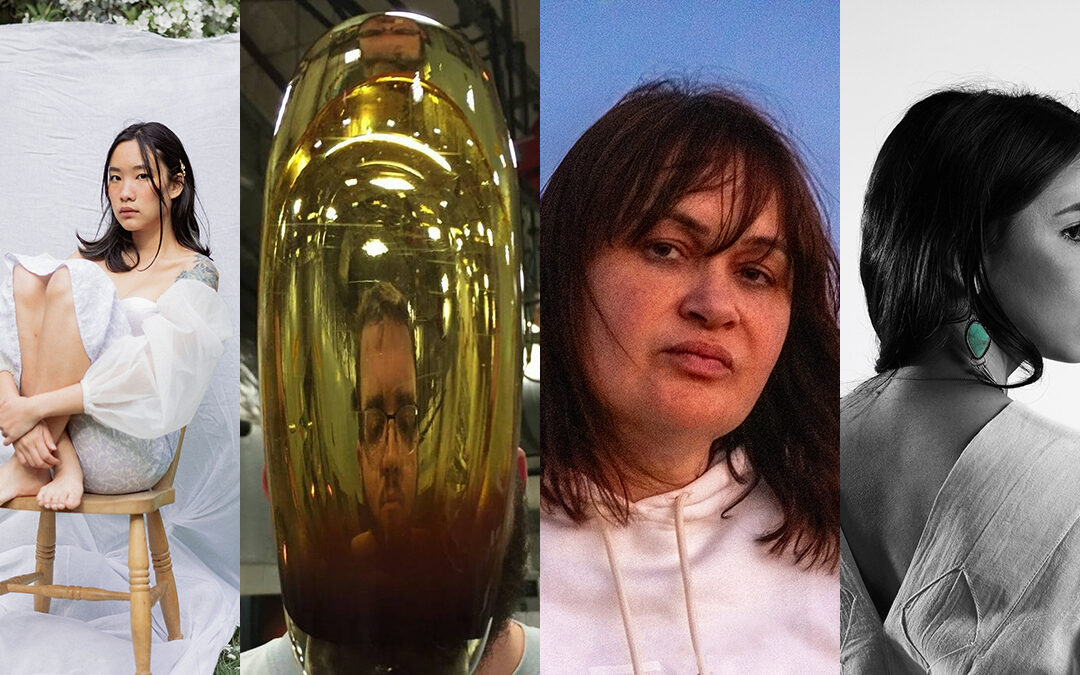
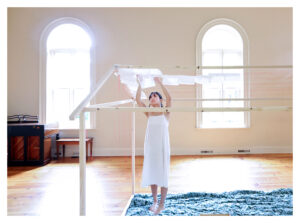 BLUE NAGA is a Thai interdisciplinary performance artist whose work utilizes videos, installations, sound, and the body to explore how art decolonizes our relationships with memory, history, non-human entities, as well as each other, especially when hegemonic power systems have long distorted our sense of interrelations. Heavily influenced by her time in the social impact sector (previously a project finalist invited to the 2016 UNICEF 3rd high-level meeting), Blue explores the intersection between art and activism and how art can facilitate the full-body listening of subaltern voices.
From an ecofeminist 2-act experimental play about the moon landing from the moon’s perspective at the Washburn Observatory to a performance-installation hybrid celebrating the roles of mothers in how we remember the Vietnam War, Blue’s work challenges normative histories and prompts us to re-examine violence hidden in plain sight. By animating female entities who refuse to forget violence, she subverts patriarchal and colonial strategies of erasure through rituals of remembrance and haunting with site-specific performances, installations, and video art.
Currently, a Fine Arts MFA candidate at UW–Madison, her work has been showcased in multiple parts of the world, from London to Dubai, including at the UN Climate Meeting, COP28. blue-naga.com
 Matthew Everett is the current Wisconsin representative of the Grindstone Collective as well as the former leader of the now defunct Project Spokeshave. He made his way to Madison via SiNiCa Studios in Fort Worth and The University of Texas at Arlington where he earned his BFA in Glass. Having begun his journey in the glass world at Tulsa Glassblowing School, he now finds himself at an interesting intersection of materials. Everett uses his work to navigate the anxiety ridden world we find ourselves in. He fosters self reliance in his work when feeling alone in the world, using humor to combat the darkness we all feel around us. His work educates, entertains, and emboldens. The Grindstone Collective is Everett’s current endeavor to bring his own skills to those who wish to move through this world with the confidence of a keen edge and the knowledge to use it.
Tanya Habjouqa is a socially engaged artist and visual researcher who examines how communities experience political violence and the ways those experiences move through land, testimony, and visual culture. For more than a decade, Habjouqa has photographed how political violence shapes daily life across the Occupied West Bank. Her work documents communities facing state-sanctioned settler attacks, forced displacement, burning and uprooting of olive orchards, seizure of springs, razed houses and farmlands, and the steady unmaking of daily life through closures, outposts, and military restrictions. Her research follows these linked forms of environmental and human assault, showing how ecological collapse, whether engineered or exploited, functions as an extension of occupation. Grounded in long-term reporting, collaborative methodologies, and material experimentation, Habjouqa’s interdisciplinary practice exists where testimony, image, and material collide, where photography becomes both evidence and metaphor. Political violence and ecological collapse anchor her work, shaped by an inheritance of displacement as a Jordanian of Circassian descent—a lineage that informs her investigation into how images construct visibility, erasure, and historical memory.
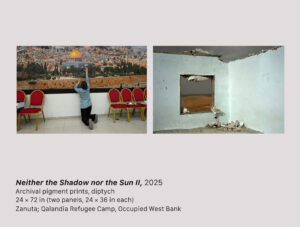 Translating field investigations into tactile forms, Habjouqa creates screenprints from early 20th-century Palestinian archives, constructs sculptural platforms from salvaged carpets, and cultivates olive seedlings and prickly cacti as living elements of installation. Through plant cultivation supported by Madison Greenhouse Store, she develops custom glass vessels with glass fabrication by Matthew Everett. Select works incorporate neon by Daniella Thach. Her experimental films link lullabies recorded from families of incarcerated Palestinians with testimonies surrounding their separation.
Beyond Palestine, Habjouqa has reported extensively on rising Islamophobia in Europe, Syrian refugee communities, racialized policing in the American South, and public health crises in Iraq, forming a broader investigation into how state power and displacement intersect across geographies.
Her work has been internationally recognized with her monograph Occupied Pleasures receiving a World Press Photo award as well as named one of the best photo books of the year by TIME and the Smithsonian. In 2025, she received a Portrait Prize from the National Press Photographers Association and was awarded the Aftermath Grant for her ongoing research in Palestine. A founding mentor of the Arab Documentary Photography Program, she has supported emerging practitioners across the Middle East and North Africa for more than a decade. Her editorial clients include The Wall Street Journal, NPR, Le Monde, National Geographic, The New Yorker, and The Washington Post. She is represented by East Wing Gallery. She holds an MA in Global Media from SOAS–University of London and is currently pursuing an MFA at the University of Wisconsin–Madison, where her studio practice translates field research from Palestine into a language of archives, sound, plants, and sculptural form. tanyahabjouqa.com
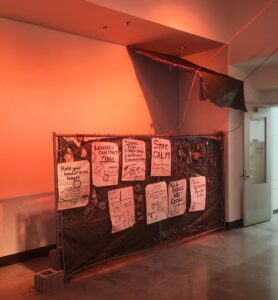
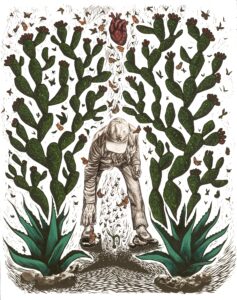 Christie Tirado is a Mexican American artist and educator from Yakima, Washington, currently based in Madison, Wisconsin. Drawing inspiration from the rich tradition of relief block printing, her work explores the impact of migration on culture, identity, traditions, memories, and histories, with a particular focus on labor-related migration within Mexican diasporas. Deeply rooted in personal familial histories, her practice reflects how cultural memory is carried and translated across generations. Through cultural exploration and her artistic practice, her work examines the layered narratives of migration and how traditions remain alive through the ongoing practice of everyday rituals and embodied gestures.
Tirado earned her Bachelor of Arts from the University of Washington in Seattle and her Master’s in Teaching from Heritage University in Toppenish, Washington. She is currently completing her Master of Fine Arts in Printmaking and is an Education Graduate Research Scholar at the University of Wisconsin–Madison. Her accolades include the 2020 Larry Sommers Fellowship through Seattle Print Arts, the 2020 Golden Apple Award for innovative teaching in Washington State, and the Gabriele S. Haberland award through Tandem Press. Her artwork has been exhibited and collected nationally in museums and galleries such as Tandem Press (Madison, Wisconsin); Tacoma Art Museum, (Tacoma, Washington); San Francisco State University (California); Sonoma State University (California); The Sun Valley Museum of Art (Idaho); and La Productora Gráfica del Bosque (Oaxaca, Mexico), among others, and has been featured in news outlets including High Country News, ProPublica, and Wisconsin Public Radio.
Previously, Tirado worked for eight years as an elementary and middle school art teacher in the Yakima Valley, Washington, and has also served as a project assistant at Tandem Press in Madison, Wisconsin. christietiradoarte.com
Reserve your spot for the April 8th Colloquium now!